
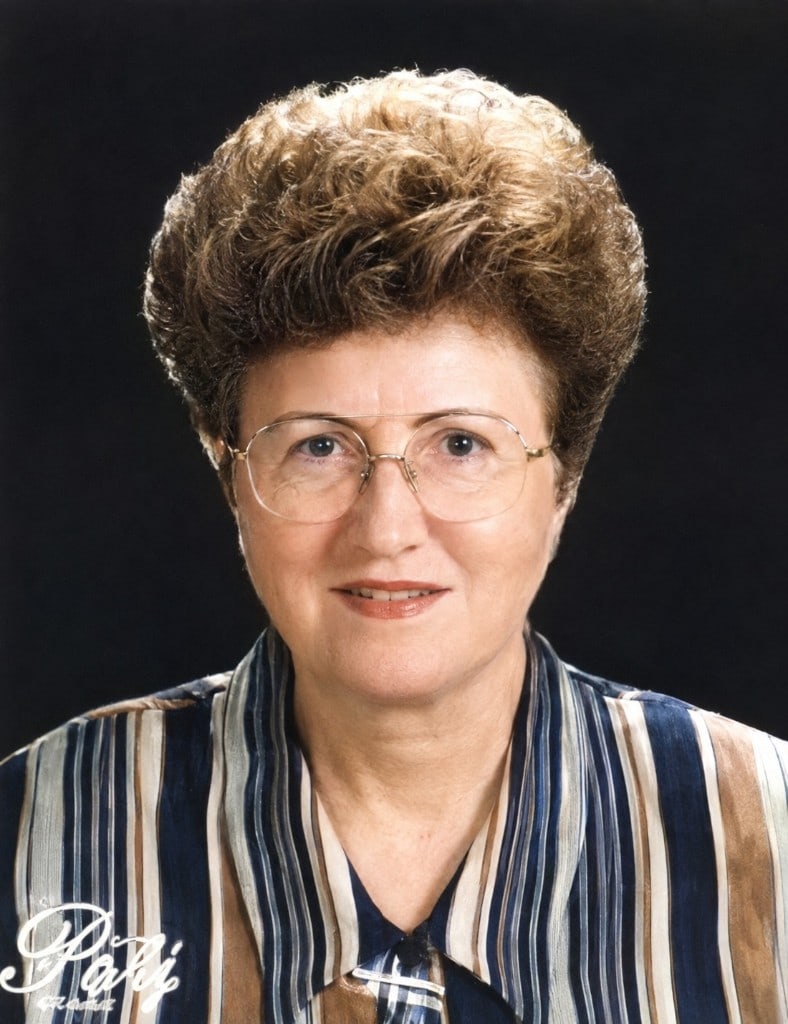
Our esteemed teacher, Prof. Dr. Yüksel Koç Yalkın, passed away on 26 August 2026. I pray for God’s mercy upon her, and offer my condolences to her family, students, colleagues and all who loved her.
A great deal can of course be said about Yüksel Hoca’s scholarship, her books, the students she trained, the offices she held and her contributions to the world of accounting. Yet as someone who had the opportunity to know her closely and to work as her assistant, I wish to begin with a simpler sentence that, for me, matters more than all of this: Yüksel Hoca was, for me, a good person and a good teacher. I shall always remember her with mercy, respect and affection.
I believe that future generations should also come to know a teacher who left such a deep mark on our academic lives.
Prof. Dr. Yüksel Koç Yalkın was among the scholars who played a pioneering role in the development of accounting education in Türkiye, in the establishment of the uniform accounting system, and especially in the institutionalisation of accounting standards.
She graduated in 1959 from the Department of Public Finance and Economics at Ankara University’s Faculty of Political Sciences. With a United Nations scholarship she undertook postgraduate study at the University of Southern California in the United States; with a fellowship from the Alexander von Humboldt Foundation she conducted research at the University of Munich. In the 1991–1992 academic year she served as a Fulbright Professor at Case Western Reserve University. She became associate professor in 1971 and professor in 1977.
She spent a very substantial part of her academic life at Ankara University’s Faculty of Political Sciences. She served as Head of the Department of Business Administration and as Head of the Accounting and Finance Division, and contributed to the training of a great many students and academics. She retired from the Faculty of Political Sciences in 2002, yet she did not withdraw from academic life; in the 2002–2003 academic year she continued as a faculty member at Istanbul Commerce University’s Faculty of Commercial Sciences.
One of the features that set Yüksel Hoca’s academic life apart was the strong connection she forged between theory and practice. She did not confine her scholarly accumulation to teaching and publication alone; she also contributed directly to the development of Türkiye’s accounting system, of accounting practice and of the profession’s institutions. Between 1960 and 1967 she worked as a financial affairs specialist, within the Ministry of Finance, on the State Economic Enterprises Reorganisation Project and on the Commission for the Reorganisation of State Economic Enterprises. In 1980 she served as Director of the SBF School of Press and Broadcasting, and in 1981 as a member of the Board of Directors of Türkiye İş Bankası.
The formation and institutionalisation of accounting standards occupied a special place in our teacher’s professional life. She took part in the Capital Markets Board’s work on accounting standards and served on the Ministry of Finance and Customs’ Commission for Determining Accounting Standards. She chaired the Turkish Accounting and Auditing Standards Board (TMUDESK) from 1994 to 2002, and in 1996–1998 she participated in the work on provisions within the International Accounting Standards Committee (IASC). In this way she stood directly inside the efforts to bring Türkiye’s accounting standards into a structure aligned with international developments.
Her contributions to professional and academic organisation were of equal importance. In 1994–1996 she served as Treasurer on the Board of TÜRMOB, thereby contributing to the institutional development of the accounting profession. She took part in the founding of the Accounting Academics’ Science and Solidarity Foundation (MÖDAV), which strengthened scholarly solidarity among accounting academics; she was one of the 17 members of the Founders’ Board and, in the Foundation’s first term, served as Vice-Chair. Through these offices she made an important contribution to the organisation of practitioners and academics around shared institutions.
I believe that the legacy Yüksel Hoca left to the Turkish accounting world is especially visible in four fields:
- She made a significant contribution to the formation of a strong textbook and teaching tradition that brought accounting theory and practice together.
- She stood directly inside the process at the time when Türkiye’s uniform accounting system was being debated and developed.
- She assumed important institutional responsibilities in Türkiye’s transition from local accounting practices to a financial reporting system aligned with international accounting standards.
- Through her office at TÜRMOB she contributed to professional organisation; through her role in the founding of MÖDAV, to academic organisation; and through the TMUDESK chairmanship, to the lasting institutionalisation of accounting standards.
The legacy she left has gone beyond her books and academic titles; it continues to live in institutional structures that still exist today, and in the people whose formation she helped to shape.
In my view, the worth of an academic cannot be measured only by the number of publications, by titles, or by the offices held. How one treats one’s students, how one guides young academics, and what trace one leaves in the memory of those with whom one works matter at least as much.
For an assistant, a teacher is not merely the person from whom one learns a body of knowledge. It is also, to a large extent, from that teacher that one learns what academic life means, the culture of the university, the manner of scholarly conduct, and the responsibility of being a teacher.
I shall always be honoured to have known her, to have been trained at her side, and to have been her assistant.
When I told her that I wished to continue my academic work with an emphasis on finance, she said, “A good accountant must know finance, and a good financier must know accounting.” That is why my interest in accounting subjects has continued. And a number of her other remarks will go on lighting my way: “If a task is to be done, it must be done seriously, correctly and on time.” “To say ‘I do not know’ is more valuable than defending what you know wrongly.” “A budget is not a forecast; it is a management tool.” “An examination script is not merely a piece of paper.”
I remember our teacher, Prof. Dr. Yüksel Koç Yalkın, with mercy, respect and affection.
Selected Books
- Yalkın, Y. K. (1974). Sanayi işletmelerinde standart maliyetler (2nd ed.). Sevinç Matbaası.
- Yalkın, Y. K. (1975). Tekdüzen muhasebe sistemi ve Türkiye’deki çalışmalar. Ankara University Faculty of Political Sciences Publications.
- Yalkın, Y. K. (1988). İşletmelerde mali analiz teknikleri (6th ed.). Olgaç Matbaası.
- Yalkın, Y. K. (1989). Yönetim aracı olarak işletme bütçeleri (3rd ed.). Turhan Kitabevi.
- Yalkın, Y. K. (2000). Bankacılar için genel muhasebe: Teori ve uygulama (8th ed.). Banka ve Ticaret Hukuku Araştırma Enstitüsü.
- Yalkın, Y. K. (2002). Şirketler muhasebesi: İlkeleri ve uygulaması (2nd ed.). Turhan Kitabevi.
- Yalkın, Y. K., & Gürdal, K. (2004). Enflasyon muhasebesi ve Türkiye uygulaması. Turhan Kitabevi.
- Yalkın, Y. K. (2019). Genel muhasebe: İlkeler ve uygulamalar (revised and expanded 20th ed.). Nobel Akademik Yayıncılık.
Comments
Comments are held for moderation and appear here only after approval. No account is required to comment.